- Home
- What We Do
- Transportation & Mobility
- Current Projects
- Greater Lowell Bicycle & Pedestrian Plan
Greater Lowell Bicycle & Pedestrian Plan
Safe & Connected Streets for All
Imagine a region with safe sidewalks, connected bike lanes, and accessible transportation for all. The Greater Lowell Bicycle and Pedestrian Plan (GLBPP) is a collaborative effort between NMCOG, the Northern Middlesex Metropolitan Planning Organization (NMMPO), project consultant Toole Design Group, the GLBPP Advisory Committee, and the Greater Lowell community to improve walking and biking infrastructure. Together, we aim to:
- Close gaps in bike and pedestrian networks
- Enhance safety for all road users
- Build a connected, sustainable transportation system
- Ensure community voices shape future investments
The GLBPP builds on prior efforts such as Envision 2050, the region’s Long-Range Transportation Plan, and the Greater Lowell Vision Zero Plan, and it aligns with NMCOG’s commitment to safe, multimodal transportation options that enhance community connectivity and quality of life.
Want to stay informed about project updates, surveys, and community events? Sign up for the Greater Lowell Bicycle & Pedestrian Plan email distribution list!
Inform the Plan!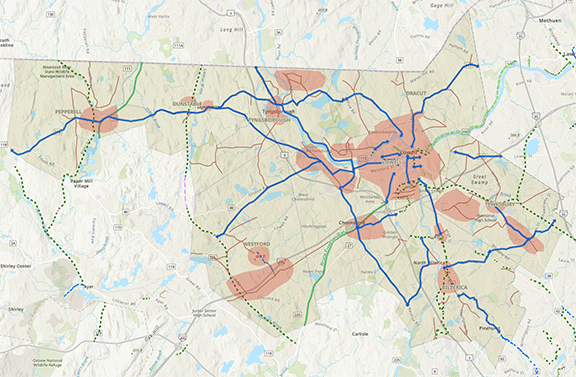
The draft Regional Bicycle and Pedestrian Network for the Greater Lowell region is now available for public review. This interactive map highlights proposed walking, biking, and trail connections across the nine Greater Lowell communities, illustrating how future routes could connect neighborhoods, schools, parks, transit stops, business areas, and town centers.
We invite residents, community groups, local organizations, and anyone who walks, bikes, or uses our roadways and trails to explore the draft network and share feedback. Your local knowledge will help refine routes, identify missing links, improve safety and access, and ensure that the final network reflects real community needs and priorities.
- Submit comments on the network on our map-based survey. Explore the draft walking and biking network and use pins to suggest changes, identify missing links, or highlight safety and access concerns. You may place multiple pins to comment on different locations across the region.
- View the presentation slides from the November 17 Virtual Public Workshop
- Watch the recording of the November 17 Virtual Public Workshop (note: breakout groups were not recorded).
Your feedback will help shape a safer, more connected, and accessible active transportation network for the Greater Lowell region.
Summer Engagement
Over the summer, NMCOG conducted a robust round of regional public outreach:
- The Existing Conditions Study includes an assessment of current walking and biking infrastructure, crash analysis with a focus on safety and vulnerable road users, identification of network gaps and barriers, key destinations and connectivity needs, and demographic and equity considerations. View the full report here: existing conditions study (PDF).
- A regional online survey conducted in Summer 2025 generated more than 445+ responses, offering insight into how residents walk and bike today, key safety concerns, and priority locations for improvements. The findings show strong public demand for safer crossings, sidewalk gap closures, trail connections, and better access for people who rely on walking and biking. View the Survey Results (PDF)
- Pop-up outreach at community events across 7+ NMCOG communities, with attendance ranging from 300 to 2,000 participants per event.
- Public workshop on July 8, 2025 at the Lowell Senior Center, where participants mapped desired routes and identified barriers.
- Walk audits and stakeholder meetings in downtown Lowell and other priority areas, focused on safety, ADA accessibility, and connectivity.
View the GLBPP Public Engagement Plan (PDF).
Input collected so far highlights the importance of:
- Safer crossings and intersections
- Sidewalk repair and installation
- Trail improvements and new connections
- Equitable access for residents who rely on walking and biking
Another public workshop is planned for Fall 2025 to review and refine draft network recommendations.
Project Schedule & Key Documents
The GLBPP is being developed through a collaborative, step-by-step process designed to gather input, analyze existing conditions, and shape a shared vision for safer, more connected walking and biking routes across the region.
- Existing Conditions Assessment (September 2025): A comprehensive baseline report of walking and biking infrastructure across Greater Lowell, including crash data, municipal sidewalk inventories, and trail network analysis.
- Public Engagement Findings (Summer 2025): Documentation of survey responses, mapped input, and pop-up event feedback.
- Final Network Plan (January 2026): The draft network is currently open for public comment until December 10 and is expected to be finalized and publicly released in late December or early January.
The project timeline—from early data collection and public outreach through draft recommendations and final plan adoption—is provided below so you can see what’s happening now and what’s coming next.
Existing Conditions Report
The Existing Conditions Report for the Greater Lowell Bicycle and Pedestrian Plan (GLBPP) has been completed as part of Phase 1 of the planning process. The report establishes the baseline for walking and bicycling conditions across the Greater Lowell region, covering existing plans and studies, infrastructure inventory, safety analysis, demographics, destinations, and active transportation demand, followed by a comprehensive summary of findings. It serves as a foundation for identifying gaps and opportunities that will guide the development of a safe, connected, and equitable regional network. View the Existing Conditions Report (PDF)
Key project documents will be shared here as they are developed. Advisory Committee materials are posted in the next section.
- Summary of GLBPP Pop-up Events
- Lowell Walk Audit Summary
- Summary of Public Workshops
Greater Lowell Bicycle & Pedestrian Plan Advisory Committee
NMCOG is working with an Advisory Committee comprised of representatives from the Greater Lowell community to guide this plan and support the vision for safer, more connected streets. The GLBPP Advisory Committee plays a central role in shaping the plan by providing input on draft materials, identifying local priorities, and ensuring recommendations reflect the diverse needs of the region’s communities.
The Advisory Committee serves as both a forum for collaborative dialogue and a working group that advises on key milestones, including the public engagement strategy, infrastructure priorities, and plan recommendations. The committee convenes throughout the planning process to review draft content and guide the development of a safer, more connected, and inclusive regional walking and biking network.
Recent GLBPP Advisory Committee Meetings
- 4th Meeting (November 3, 2025): Members learned about the methodology -- quantitative data and qualitative input from summer outreach and engagement -- that informed Toole Design Group's recommendations for the draft bicycle and pedestrian networks. Advisory Committee members provided input on the draft network as part of NMCOG's preparation for the November 17 Virtual Public Workshop.
- 3rd Meeting (September 15, 2025): Members reviewed the Existing Conditions Assessment and engagement results, discussed trail network opportunities, and provided input on key destinations for analysis. Advisory Committee members are submitting final comments by September 19.
- 2nd Meeting (June 16, 2025): Discussion of existing conditions and summer outreach planning.
- Kickoff Meeting (May 6, 2025): Introduction of project vision, goals, and engagement approach.
Contact
For more information or to get involved in the Bicycle and Pedestrian Planning process, contact Amanuel Regassa.